Most people don’t think about their spinal discs until something goes wrong. Whether it’s a slipped disc, sciatica or persistent lower back pain, these small structures play a vital role in keeping your spine healthy, mobile and pain-free.
Understanding how your intervertebral discs work can help you make better daily decisions that reduce your risk of injury and long-term degeneration.
What Is an Intervertebral Disc?
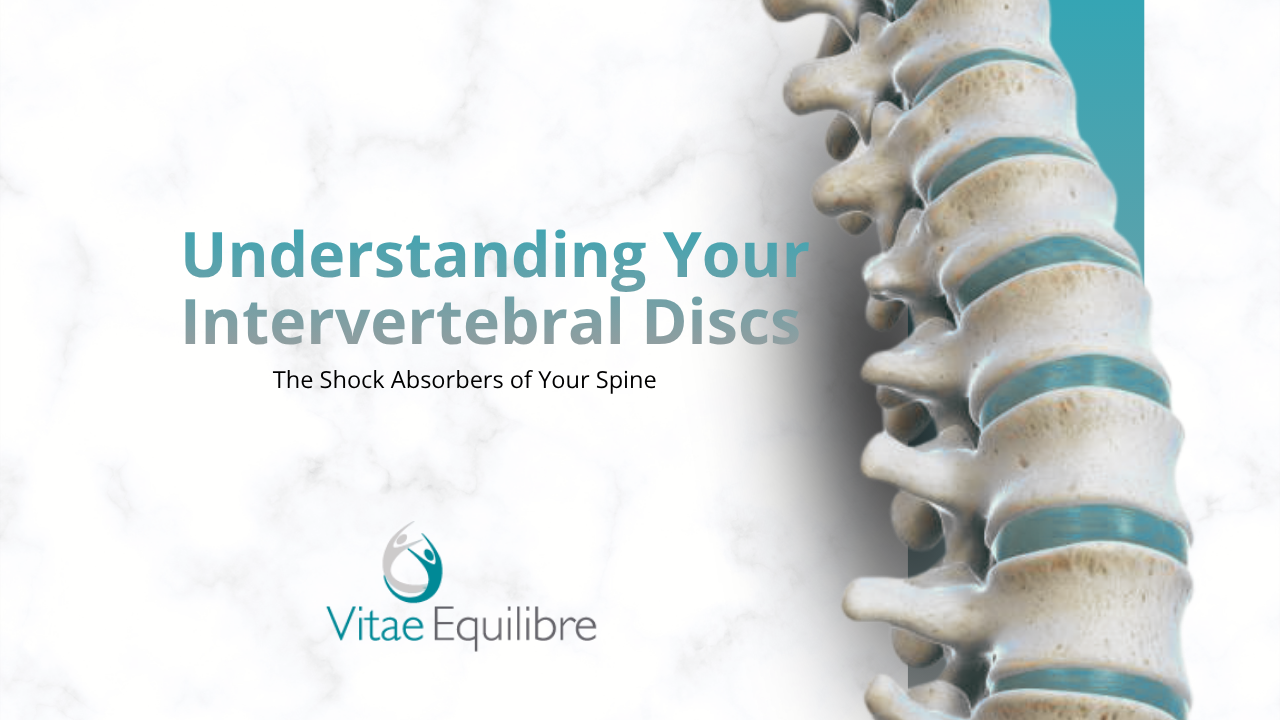
An intervertebral disc is a specialised structure located between each vertebra (the bones of your spine). These discs act as the spine’s natural shock absorbers, allowing you to walk, run, jump and move comfortably while protecting the bones and nerves of your back.
Every movement you make takes place through these discs, making them one of the most important structures in the spine.
The Three Parts of an Intervertebral Disc
Each disc consists of three main components that work together.
1. Annulus Fibrosus
The annulus fibrosus is the tough outer ring of the disc. It is made from multiple concentric layers of strong fibrocartilage and collagen fibres.
Its primary functions are to:
- Provide strength and stability
- Resist twisting and rotational forces
- Contain the softer centre of the disc
Think of it as the tyre wall that keeps everything securely in place.
2. Nucleus Pulposus
The nucleus pulposus is the soft, jelly-like centre of the disc. It contains a high percentage of water and is responsible for distributing pressure evenly throughout the disc.
Unlike most tissues in the body, the nucleus has no direct blood supply. Instead, it receives nutrients through the cartilage end plates above and below it.
The nucleus constantly changes depending on pressure:
- Lower pressure allows it to absorb water and rehydrate.
- Higher pressure causes it to lose water and dehydrate.
This natural cycle is essential for maintaining healthy discs.
3. End Plates
The end plates are thin layers of cartilage that connect each disc to the vertebral bodies above and below.
Their main role is to:
- Anchor the disc to the spine
- Allow nutrients to pass into the nucleus
- Help keep the disc healthy over time
Without healthy end plates, the disc cannot receive the nutrition it needs.
What Do Spinal Discs Actually Do?
Intervertebral discs perform several essential functions.
Shock Absorption
Every time you walk, run, jump or land from a step, your discs absorb the forces travelling through your spine.
Without them, every impact would be transferred directly into the vertebrae.
Allow Movement
The discs make spinal movement possible, including:
- Forward bending (flexion)
- Backward bending (extension)
- Side bending
- Rotation
They provide flexibility while maintaining stability.
Maintain Spinal Spacing
Healthy discs keep the vertebrae separated, preserving the openings where spinal nerves exit the spine.
Maintaining this space helps prevent nerve compression and irritation.
Why Disc Pressure Matters
A useful way to think about a spinal disc is like the tyre of a car.
Just as a tyre relies on internal pressure to function properly, the nucleus inside your disc also relies on pressure. However, unlike a tyre, spinal disc pressure constantly changes depending on your posture.
When pressure increases for prolonged periods, the nucleus loses water and begins to dehydrate.
Repeated dehydration over many years contributes to disc degeneration.
Common Disc Conditions
Herniated (Slipped) Disc
A herniated disc occurs when the soft nucleus pushes through a tear in the annulus fibrosus.
This protrusion may compress nearby spinal nerves and, in severe cases, even place pressure on the spinal cord.
Common causes include:
- Falls or traumatic injuries
- Repetitive lifting
- Poor posture over many years
- Repeated bending under load
Degenerative Disc Disease
As we age, repeated loading and daily activities gradually reduce the water content within the disc.
Over time the disc becomes:
- Less hydrated
- Less elastic
- Less capable of absorbing shock
This natural ageing process can contribute to stiffness and chronic back pain.
Sciatica
Sciatica is not a condition itself but rather a symptom.
When a herniated disc narrows the space around the spinal nerves, it may compress the sciatic nerve, producing pain that radiates from the lower back into the buttock and down the leg.
Many people describe this as burning, shooting or electric pain.
How Different Postures Affect Disc Pressure
Researchers often compare disc pressure to standing, which is considered 100%.
Here are some interesting comparisons:
| Position | Relative Disc Pressure |
|---|---|
| Standing | 100% |
| Lying on your back | 25% |
| Lying on your side | 30% |
| Standing and bending forward | 150% |
| Sitting upright with good support | 140% |
| Sitting and leaning forward | 200% |
| Standing while carrying 10 kg in each hand | 220% |
| Sitting while carrying 10 kg | 270% |
One of the biggest surprises is that sitting—especially while leaning forward—places more pressure on your discs than standing or even carrying moderate loads.
Why Movement Is So Important
Unlike muscles, discs rely on movement to stay healthy.
Walking and changing positions regularly helps to:
- Improve nutrition to the nucleus
- Encourage healthy hydration
- Share loads more effectively across the spine
- Reduce prolonged disc compression
The body was designed to move—not remain seated for hours at a time.
Practical Tips to Protect Your Spine
Keeping your discs healthy doesn’t require complicated exercises. Small daily habits make a significant difference.
- Sit upright with good back support.
- Avoid prolonged slouched sitting.
- Change position regularly throughout the day.
- Stand up and walk every 30–45 minutes if you have a desk job.
- Avoid spending long periods bent forward.
- Stay physically active with regular walking and gentle movement.
Final Thoughts
Your intervertebral discs work continuously to support your body, absorb shock and allow movement. While ageing is inevitable, the rate at which discs degenerate is heavily influenced by posture, movement and the way we load our spine every day.
One of the most important messages is this: prolonged sitting places greater pressure on your spinal discs than standing, and leaning forward while sitting increases that pressure even further.
By improving your posture, moving more frequently and avoiding sustained positions, you can help keep your discs healthier for longer and reduce your risk of back pain, disc degeneration and sciatica.